 How-to
How to Reduce Cooling Costs with Window Film
Last Updated: November 12, 2026
Quick Summary
Window film blocks solar heat before it passes through glass, reducing the load on your air conditioner and cutting cooling costs. A study in the MDPI Sustainability Journal found window film cut annual cooling energy use by 32% to 35% in Florida. The effect is largest on west- and south-facing glass.
- Spectrally selective film blocks infrared heat while keeping visible light transmission high enough to preserve a bright room.
- Check the manufacturer's compatibility chart for dual-pane, low-e coated, and older single-pane glass before buying.
- Low-e retrofits deliver cooling savings of 10% to 20%, per a summary of national lab data.
- The MDPI study noted a marginal 2% rise in heating energy in cold months, so weigh summer savings against winter trade-offs.
- A Meridian Window Tint case study found commercial installations paid for themselves in about two years through lower HVAC costs.
Table of Contents
- How Window Film Cuts Cooling Costs: Solar Heat Gain and Your AC Load
- The Best Home Window Film for Heat Rejection and How Much Energy Residential Window Tint Can Save
- Window Film Downsides, Installation and Maintenance: What to Know Before You Buy
- Frequently Asked Questions
How Window Film Cuts Cooling Costs: Solar Heat Gain and Your AC Load
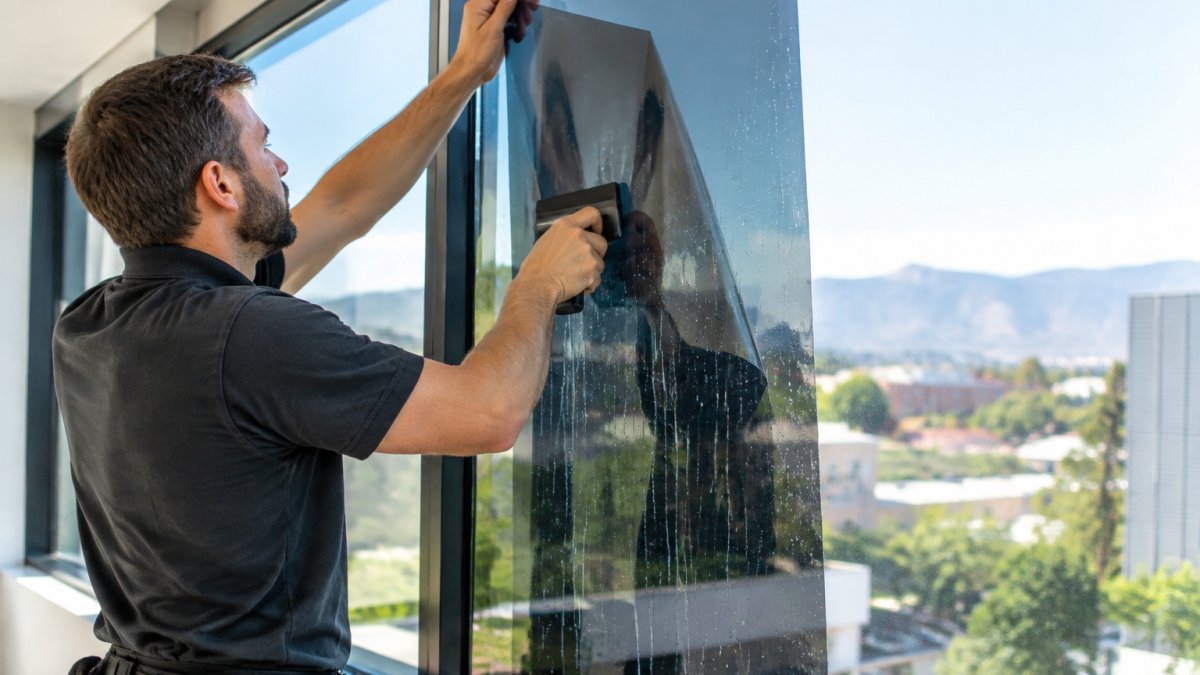
Window film is a thin, professionally applied layer that blocks solar heat before it passes through glass, cutting the load on your air conditioner. In Florida, that matters: a study in the MDPI Sustainability Journal found window film cut annual cooling energy use by 32% to 35%.
Sunlight hits glass, which lets most of that energy through as solar heat gain, forcing your AC to work harder. Film reflects, absorbs, or filters that energy at the pane.
The governing number is the solar heat gain coefficient (SHGC), the fraction of solar energy entering a room as heat on a 0-to-1 scale. Clear single-pane glass runs around 0.8 to 0.9; quality solar-control film pulls that down substantially. Visible light transmission (VLT) is the companion metric, spectrally selective films lower SHGC while keeping VLT high enough to preserve a bright room.
Less heat gain means less AC runtime, and that shows up on the cooling line of your bill. The effect is largest on west- and south-facing glass and smallest on shaded north-facing windows.
Here are the key figures on how window film reduces solar heat gain and cooling load.
| Metric | Value | Note |
|---|---|---|
| Annual cooling energy cut (Florida study) | 32% to 35% | MDPI Sustainability Journal study |
| SHGC of clear single-pane glass | 0.8 to 0.9 | 0-to-1 scale |
| SHGC after quality solar-control film | Pulled down substantially | Lower is better |
| Biggest effect | West- and south-facing glass | Smallest on shaded north-facing windows |
| Companion metric | Visible light transmission (VLT) | Spectrally selective films keep VLT high |
The Best Home Window Film for Heat Rejection and How Much Energy Residential Window Tint Can Save
Spectrally selective film is generally considered a strong choice for heat rejection, because it blocks infrared energy and heat while letting visible light through. Solar-control film is the broader category; spectrally selective film is the upgrade that keeps rooms bright.
Inventory your windows, orientation, glass type, and any factory coating, then set priorities (heat rejection first, daylight second, privacy third). Compare films on SHGC for heat and VLT for light, then confirm compatibility before you buy.
Not every film belongs on every pane. Dual-pane and insulated glazing units, glass with existing low-e coatings, and some older single-pane windows can carry thermal-stress risk, so check the film manufacturer's compatibility chart and warranty terms for your specific glass before purchase.
How much can residential window tint save? The Center for Energy and Environment (2025) found low-e window panels cut heating and cooling use by an average of 14%, with clear panels averaging 11%. Low-e retrofits deliver heating savings of 15% to 30% and cooling savings of 10% to 20%, per The Windows Tinting's summary of national lab data.
To judge payback, add the film, professional installation, and any maintenance over its service life, then divide by expected monthly cooling savings. Sun-exposed glass in hot climates often pays back in a few cooling seasons; shaded or north-facing windows may take far longer.
Watch out: film blocks winter warmth too. The MDPI study noted a marginal 2% rise in heating energy in cold months, so weigh summer savings against winter trade-offs and favor selective application.
Energy savings from window film and low-e retrofits
Window Film Downsides, Installation and Maintenance: What to Know Before You Buy
The main downsides are real: poor installation can cause bubbling and peeling, lower-quality film may fail early, and thermal stress can crack some older or single-pane glass, so a professional site check is a sensible first step.
Installation and maintenance are simpler than most people expect:
- Pro install takes a few hours per typical home, with minimal disruption
- Clean with an ammonia-free cleaner and a soft cloth
- Avoid abrasive pads, which scratch the coating
- Expect a short curing period before the film fully sets
A Meridian Window Tint case study found commercial installations paid for themselves in about two years through lower HVAC costs.
The gap between a film that saves energy and one that fails early comes down to the film and the installer. SolarGlassPros brings over 40 years of experience, a family-owned approach, and a lifetime factory warranty on all films. We reduce up to 90% of solar heat while protecting your interiors from UV rays. Get started with SolarGlassPros and cut your cooling costs with a free quote.
Frequently Asked Questions
How much can window film reduce cooling costs?
Actual savings depend on your climate, window orientation, and how much sun your glass receives. In South Florida, where the cooling season runs most of the year, the cooling-side savings carry more weight than the small winter heating trade-off.
What are the downsides of window film?
The main window film downsides are a possible small increase in winter heating costs in colder climates, since film blocks some beneficial solar heat gain. Dark or highly reflective films can also reduce visible light and change how glass looks from outside. On double-pane windows, some films raise thermal-stress risk, so check compatibility with the glass manufacturer. Professional installation and an ammonia-free cleaner protect film durability and avoid bubbling or peeling.
Is window film worth it for home windows?
For homes with heavy sun exposure, window film may be worth considering. A free quote from SolarGlassPros helps you weigh potential payback against your specific windows.